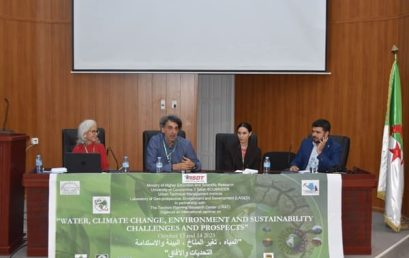
An international seminar on

WATER, CLIMATE CHANGE, ENVIRONMENT &
SUSTAINABILITY

CHALLENGES AND PROSPECTS

October 13 and 14 2025

Seminar objectives

The overall objective of the seminar is to design and implement a more sustainable and particularly effective model for addressing socio-economic and socio environmentalissues. It will serve as an essential platform to bridge the gap  betweenexperts, scientists, practitioners and decision-makers in order to mobilize innovations, knowledge and skills as well as disseminate the most recent scientific knowledge.

It seeks to achieve a number of specific objectives, such as:

1. Open a scientific debate and a space for the exchange of experiences on the reality of environmental problems in Algeria and the Mediterranean.

2. Identify adaptation processes and instruments for sustainable management based on the evaluation of adaptation strategies.

3. Analyze, diagnose and manage global environmental changes.

4. Work on a scientific and systematic approach to sustainable development to acquire the expertise, skills and tools necessary to solve the above-mentioned problems.

5. Use geomatics techniques, including GIS and remote sensing to manage these problems.

Argument

Cradle of civilizations for millennia, the Mediterranean basin brought together 522 inhabitants in 2020, which represents 6.7% of the world population where two thirdslive in territories undergoing perpetual urbanization, particularly in cities. (https://planbleu.org/wp content/uploads/2020/10/Note-de-synthese-38-Tendances   demographiques-Plan-Bleu.pdf).

The latter, which have spread rapidly, are faced with a range of risks including natural disasters (earthquakes, floods, volcanic eruptions) or those caused by human activities such as forest fires, pollution, etc. all of these actions that the biosphere undergoes interact with climate change, threatening the balance of hydrospheric, lithospheric and atmosphericecosystems.

Climate experts, such as those from the Intergovernmental Panel on Climate Change (IPCC), point to human activities, especially those that release greenhouse gases, as the main cause of this warming. Industry, agriculture, road transport and housing would therefore be the main culprits, and a change in our behavior is essential to slow it down.

Against this backdrop, the Geo-prospecting, Environment and Development Laboratory (LAGED), in collaboration with the Territory Planning Research Center (CRAT) and the Bioclimatic Architecture Laboratory (ABE), are organizing the international seminar about, Climate Change, Environment and Sustainability (ECCED), Challenges and Prospects, on 13 and 14 October 2025.

Axes (themes) of the seminar

AXIS 1: EXTREME EVENTS AND CLIMATE CHANGE, IMPACTS AND ACTIONS
  • Anticipate natural risks linked to flooding, desertification, erosion, climate change, forest fires and others…
AXIS 2: IMPACT OF CLIMATE CHANGE ON THE ENVIRONMENT
  • Impact of soil, air and water pollution.
  • Impact of industrial pollution on the urban environment
  •  Recovery of natural substances
  •  Impact on animal and plant biodiversity.
  • Biogeography and biodiversity management
AXIS 3. HYDROLOGY, HYDROGEOLOGY AND WATER. CURRENT RESOURCE ISSUES AND CHALLENGES
  • Urban water resource management
  • Groundwater and climate change
  • Hydrogeological modeling and decision support
AXIS 4. DATA ACQUISITION, ARTIFICIAL INTELLIGENCE, REMOTE SENSING, ENVIRONMENTAL MONITORING AND GEOSPATIAL ANALYSIS
  •  Use artificial intelligence and geometrics (GIS and remote sensing) to map natural resources and build up a database over time.
  • Mapping the spatiotemporal chronology of land use
  • Mapping and monitoring urban heat islands
  • Use of index approaches to study various natural phenomena for future simulations.
AXIS 5: DEVELOPMENT OF RENEWABLE ENERGIES (OR ENERGY TRANSITION)

Fossil fuels are by far the biggest contributors to global climate change, responsible for over 75% of global greenhouse gas emissions and almost 90% of all carbon dioxide emissions.

As a result, experts agree that the transition to low-carbon energies is one of the
main solutions for mitigating climate change.

(https://www.un.org/fr/climatechange/science/causes-effects-climate-change).

Despite this, the region bordering the Mediterranean basin is experiencing a steady 1.7% increase in energy demand, driven by demographic pressure, economic growth and changing climatic conditions. Similarly, fossil fuels remain the dominant component of the energy mix, despite the fact that the region holds just 5% of the world's oil and gas reserves, 98% of which are located on the southern shore.

(https://planbleu.org/wp-content/uploads/2020/10/Note-de-synthese-38-Tendances-demographiques-Plan-Bleu.pdf).

In view of all this, it is crucial to discuss the reasons why the region is lagging behind in the development of renewable energies, to identify alternatives, assess potential and identify the keys to a successful energy transition to mitigate climate change.

AXIS 6. URBAN HEAT ISLANDS: PROSPECTS, CHALLENGES AND POTENTIAL
  • Infrastructure and built environment: Analysis of the effects of UHIs on urban infrastructure, including increased energy demand for cooling, pressure on power grids, material degradation and implications for  urbanplanning and design.
  • Ecological and environmental impacts: Exploration of the impact of UHI on local ecosystems, biodiversity, water resources and urban green spaces, as well as the potential for eco-system services such as cooling, air purification and flood mitigation.
  • Mitigation strategies and innovative solutions: Highlighting effective measures to mitigate UHI, such as green roofs, reflective roofs, urban forestry, reflective pavements and the integration of natural elements into urban landscapes.
AXIS 7: SOCIO-ECONOMIC APPROACH AND BLUE ECONOMY
  • Impacts on society and the environment
  • Social and environmental adaptations
  • Impact on agriculture
  • Impact on human health
  • Policy and governance

IMPORTANT DATES

IMPORTANT DATES

02 February 2025

Conference Announcement

05 March 2025

Abstract Submission Deadline

05 April 2025

Notification of acceptance of abstracts

30 April 2025

Submission of extended abstracts

13-14 October 2025

 Conference Date

PARTICIPATION FEES:

  • Algerian teacher-researcher: 6,000 DA
  • Algerian doctoral students: 3,000 DA
  • Foreign teacher-researchers: 50 euros
  • Foreign PhD students: 30 euros
  • Professionals: 15 000 Da

Target population

  • Teacher-researchers and researchers in the field of geography, ecology, town planning, landuse planning and the environment;
  • Experts and specialists in environmental issues;
  • Local authorities, different directorates and specialized organizations in the field;
  • Civil society organizations interested in the theme of environmental protection.

MODALITIES OF PARTICIPATION:

  • Hybrid mode:
  • in situ: at the conference room of the Urban Technical Management Institute of
    Constantine 3 (Ali Mendjeli)
  •  Online.
INSTRUCTIONS TO AUTHORS

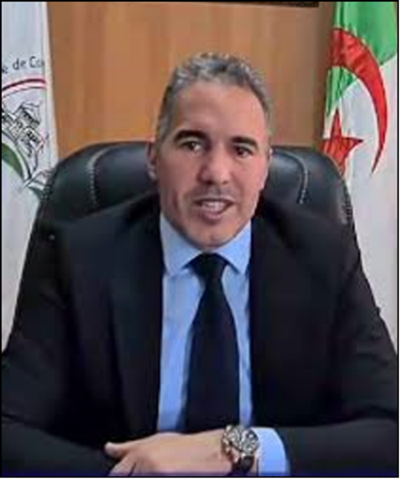
Honorary President

Pr.Chaabane BAITICHE
Pr.Chaabane BAITICHE Rector of the University of Constantine 3 Salah BOUBNIDER
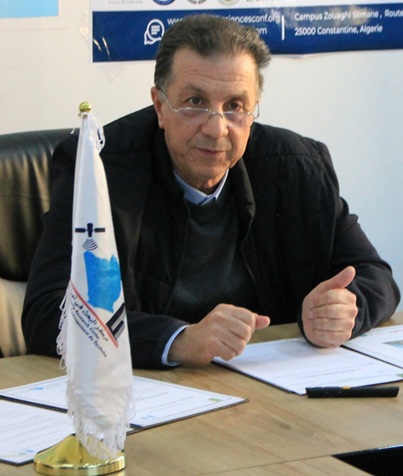
Pr.Chawki  BENABBAS
Pr.Chawki BENABBAS Director of the tirrotory development research center(CRAT)
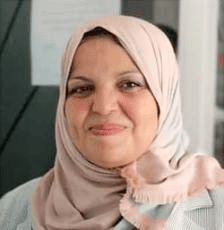
Dr.Latifa </br>        BOULAHIA
Dr.Latifa
BOULAHIA
President of the seminar
Director of the
LAGED Laborator

First plenary 13 octobre:

Prof.Fares KESSASRA
Prof.Fares KESSASRA university of Jijel, Algeria
 Mme Doria ADMAN
Mme Doria ADMAN GIZ, Algeria
Prof. Sonia DRIDI-DHAOUADI
Prof. Sonia DRIDI-DHAOUADI university of Monastir, Tunisia
Dr Ismail. DABANLI
Dr Ismail. DABANLI Technical university of Istanbul, Turquie
Djamal BENGUESMIA
Djamal BENGUESMIA National Office for Rural Development Studies (BNEDER)
 Prof Carlo PREVIL
Prof Carlo PREVIL University of Abitibi-Témiscamingue, Canada

Second plenary 14 octobre:

Scientific Committee

Dr. Salim BRAGDI

President of the Scientific Committee

🌿 Scientific Committee🌿

DrFatima Zahra CHAFIIGTU - Constantine 3 UniversityAlgérie
ProfHamza AMIRECHEIGTU - Constantine 3 UniversityAlgeria
DrFoued BOUZAHZAHIGTU - Constantine 3 UniversityAlgérie
ProfDjamel DAKOUMIIGTU - Constantine 3 UniversityAlgeria
DrNedjoua BOUARROUDJIGTU - Constantine 3 UniversityAlgérie
ProfChaouki BENABBASLAGED Laboratory - Constantine 3 University (CRAT)Algérie
DrOualid MEDDOURIGTU - Constantine 3 UniversityAlgérie
ProfBOUADAM RoukiaLAGED Laboratory - Constantine 3 UniversityAlgérie
DrREDJAL OmarIGTU - Constantine 3 UniversityAlgérie
ProfSaliha ABDOUABE Laboratory - Constantine 3 UniversityAlgérie
DrAicha DJEGHARIGTU - Constantine 3 UniversityAlgérie
ProfSamira LOUAFI-BELLARAABE Laboratory - Constantine 3 UniversityAlgérie
DrAbdelhafid BOUGUESSAIGTU - University Constantine 3Algérie
ProfToufik MOSTEFAOUICRATAlgérie
DrAnouar BOUCHEHAMConstantine 3 UniversityAlgérie
ProfSaïfi MERDASCRATAlgérie
DrFouad BOUAICHAConstantine1 UniversityAlgérie
ProfNacira CHOURGHALBordj Bou Arreridj universityAlgérie
DrAmmar LAKHDARConstantine1 UniversityAlgérie
ProfFaiza ALLOUCHESousse UniversityTunisie
DrRabiaa DEBBACHEConstantine1 UniversityAlgérie
ProfRejouane MEJDOUBSousse UniversityTunisie
DrAsma BAKIRIConstantine 1 UniversityAlgérie
ProfIsmail DabanliIstanbul Technical UniversityTurkey
DrChourouk HAMLAConstantine 1 UniversityAlgérie
ProfAlessandra CasuDegli Studi University of SassariItaly
DrNabil MENCHARUniversity of Oum BOUAGUIAlgérie
ProfJosep VILA SUBEROSUniversity of GironaSpain
DrAïssa BOULKAIBETUniversity of Oum BOUAGUIAlgérie
ProfCarlo PREVILUQATCanada
DrAissa BENHAMADAUniversity of Oum BOUAGUIAlgérie
DrStéphane DesruellesUniversity of SORBONNEFrance
DrBrahim DJEBNOUNEUniversity of TébessaAlgérie
DrLatifa BOULAHIALAGED Laboratory - Constantine 3 UniversityAlgérie
DrTakiedine HESSAINIAUniversity of TébessaAlgérie
DrAicha BENAZOUZLAGED Laboratory - Constantine 3 UniversityAlgérie
DrAli HADJLAUniversity of TébessaAlgérie
DrFoudil KHALEDLAGED Laboratory - Constantine 3 UniversityAlgérie
DrAbdelhafid BOUZEKRIEcole des forêts KhenchelaAlgérie
DrSarah BENHARKATABE Laboratory - Constantine 3 UniversityAlgérie
DrHicham CHENIKEREcole des forêts KhenchelaAlgérie
DrRadia BOUARROUDJABE Laboratory - Constantine 3 UniversityAlgérie
DrMohamed SERBAHENS Bouzaréah, AlgerAlgérie
DrSara SAHNOUNEABE Laboratory - Constantine 3 UniversityAlgérie
DrLyes BELAIDUSTHB University - AlgerAlgérie
DrDounia KEDDARICRATAlgérie
DrHabib YahyaouiBatna 2 UniversityAlgérie
DrNabil CHARCHARCRBTAlgérie
DrFouzia BOUDJEMLINEENS-SétifAlgérie
DrHani BOUYAHMEDCRBTAlgérie
DrWafa MEDJITNAAlger 2 UniversityAlgérie
DrOussama BELAHMADICRBTAlgérie
DrAmir AMARBejaia UniversityAlgérie
DrMeriem BOULTIFCRSTRAAlgérie

Dr. Foudil KHALED

President of the Organizing Committee

🌿 Organization committee 🌿

MrToufik AMIRECHEIGTUAlgeria
MrKarim KAOUAConstantine 3 UniversityAlgeria
MrsAmina BENAMIRAIGTUAlgeria
DrSara SAHNOUNEConstantine 3 UniversityAlgeria
MrHaidar ABDELATIFIGTUAlgeria
DrRadia BOUARROUDJConstantine 3 UniversityAlgeria
DrAicha BENAZOUZIGTUAlgeria
DrSarah BENHARKATConstantine 3 UniversityAlgeria
DrSouad BELHANACHIIGTUAlgeria
DrAhmed ALLIOUCHECRATAlgeria
DrBENCHENNA AbdelaliIGTUAlgeria
DrDounia KEDDARICRATAlgeria
DrKenza El HADEUFIGTUAlgeria
DrChaima TOUABACRATAlgeria
MrsNahla BENSALHIAIGTUAlgeria
DrMed Ikbal FARAHCRATAlgeria
MrsAziza DRIFIGTUAlgeria
DrSara KEBLOUTICRATAlgeria

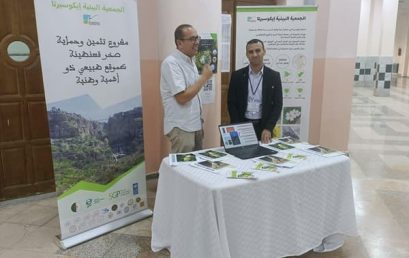
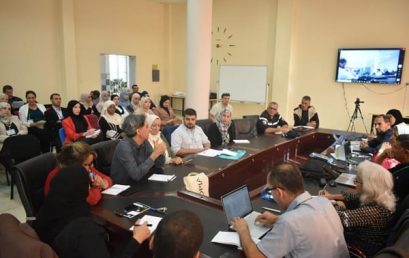
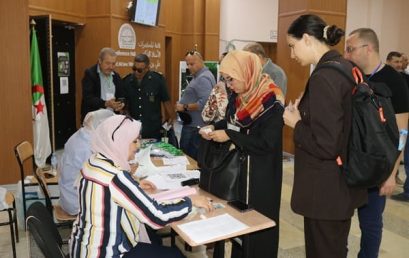
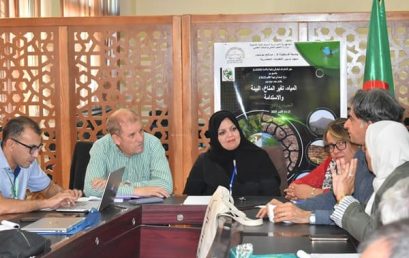
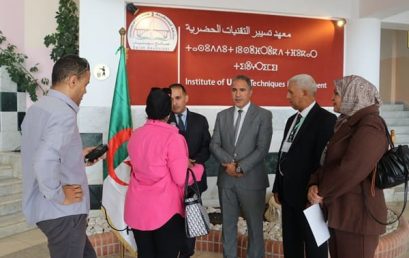
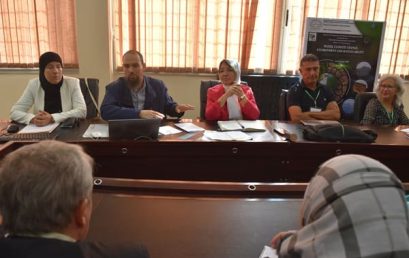
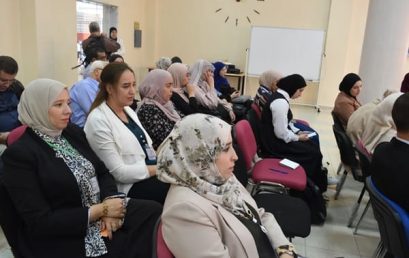
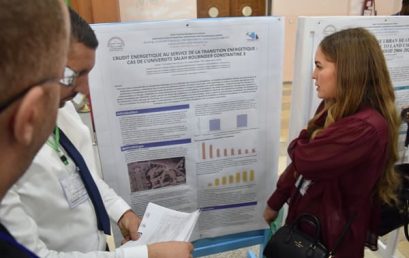
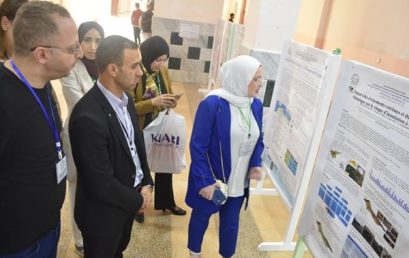
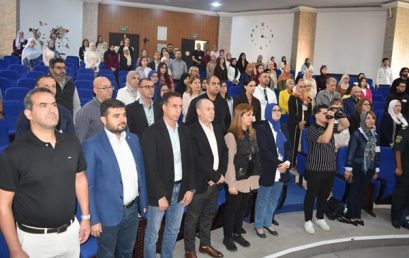
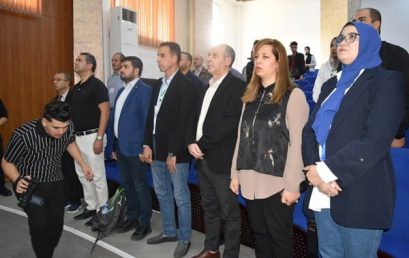
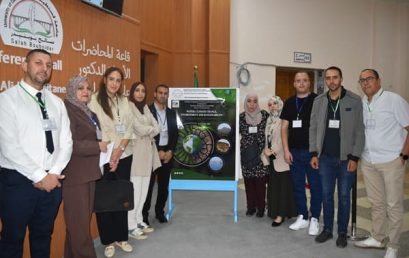
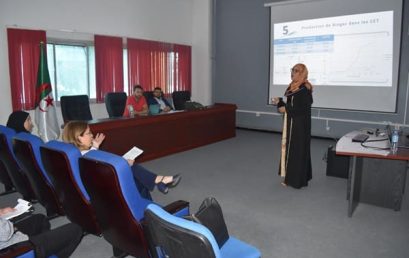
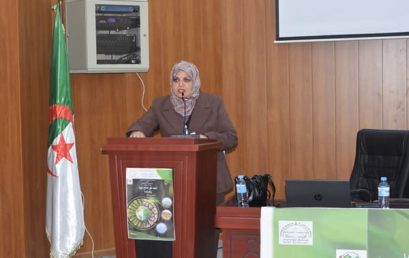
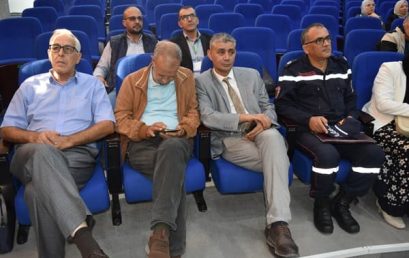
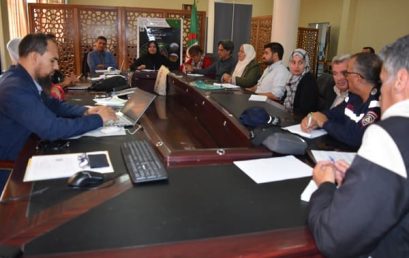
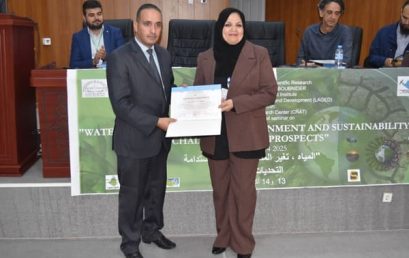
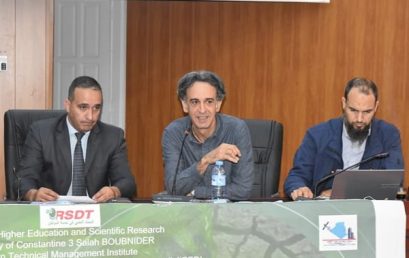
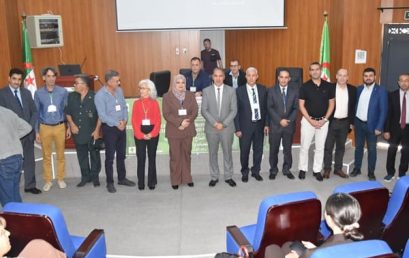
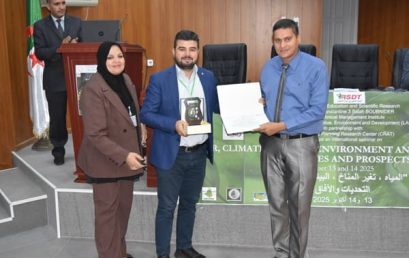
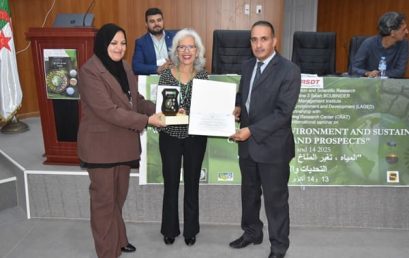
PHOTOS ECCED2025

ecced2025@univ-constantine3.dz